
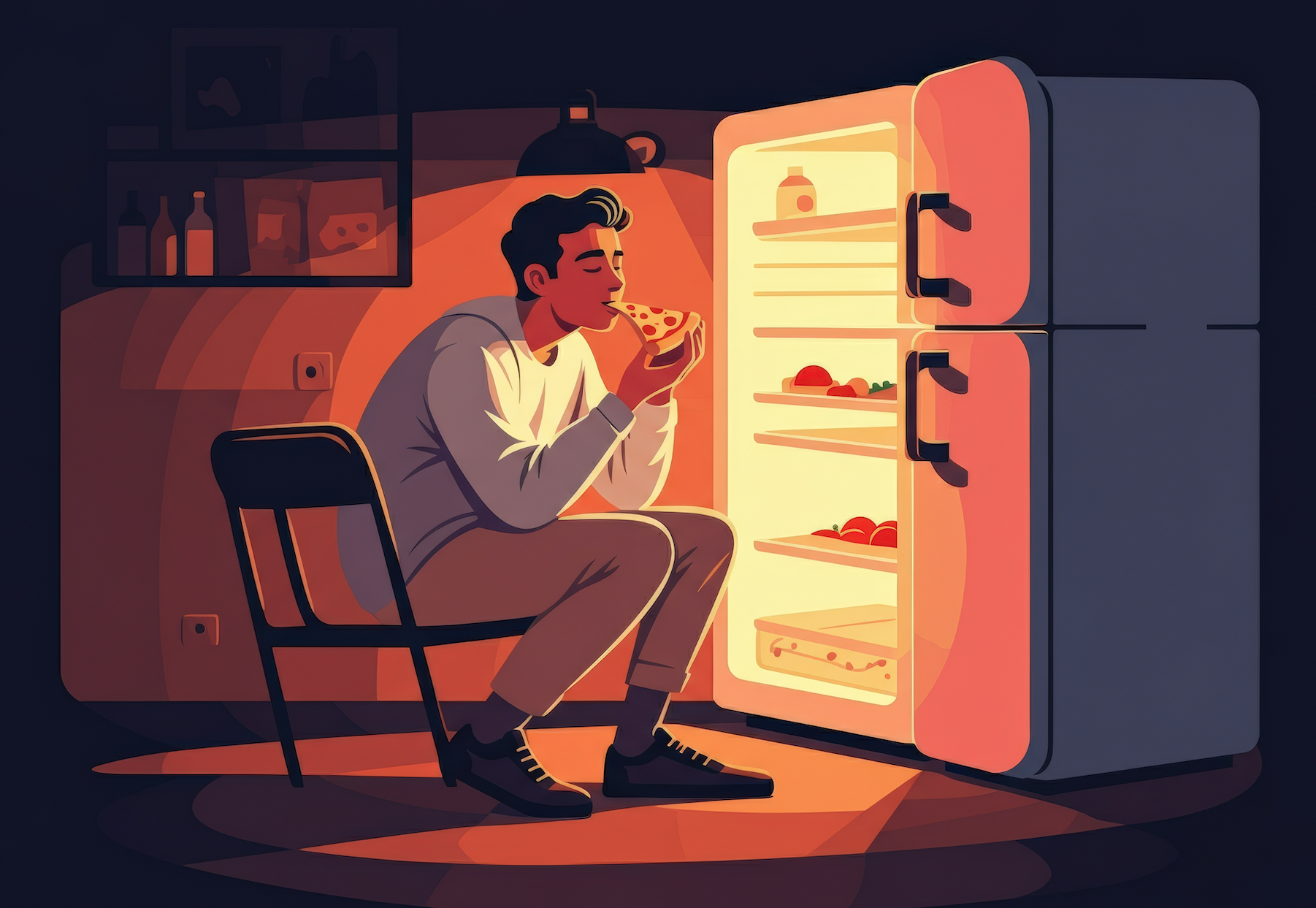
Next time you think about raiding the fridge or pantry for a midnight snack — stop and think twice. Eating too close to bedtime isn’t generally a good idea, but certain types of foods can make the effects even worse. Most experts recommend abstaining from food for about two to four hours before bed, according to Sleep Foundation. But if you’re trying to be extra cautious, here are the specifics on what you should avoid. (Bad news: it’s all the good stuff).
Salty and Fatty Foods (i.e. Fried)
According to Cleveland Clinic, salty foods can raise your blood pressure and cause dehydration which can lead to fluid retention. Dr. Sandra Darling says that salty foods before bed can result in “restless sleep, frequent awakenings and not feeling rested in the morning.” According to Healthline, studies have shown that fatty foods can lead to lighter sleep, insomnia and shorter sleep times. Fried foods, salty snacks, pizza, cold cuts and canned soup and vegetables can all be major culprits.
Simple Carbs and Sugar
Eating desserts and other sweets, bread, crackers and pasta too close to bedtime can be detrimental. When you eat sugar, your blood sugar levels increase, and your body uses sugar to produce energy. Sugar “makes you ready for activity,” something that can make it difficult to fall asleep and get good sleep. Magnesium, which is very beneficial for sleep is also used up when you consume sugar, according to The Guardian.
Caffeine (Yes, Even Chocolate)
This one is probably a no brainer. Caffeine keeps you awake, so it makes sense that it would keep you up if you drank it before bed. However, two to four hours may not be enough time. According to the Journal of Clinical Sleep Medicine and Sleep Foundation, you should not drink caffeine six to eight hours before bed, though this time can increase or decrease depending on the person. As a rule of thumb, it may be best to just avoid it altogether after your lunch hour. While chocolate can follow the two to four hour rule, it still contains caffeine and sugar, which can both disrupt sleep.
Spicy Foods
According to Healthline, spicy foods can lead to indigestion, heartburn and acid reflux. These conditions make sleeping difficult and cause irritation. Spicy foods with higher levels of heat, like hot peppers, can also raise your body temperature, which can cause discomfort and difficulty falling asleep.

Alcohol
According to Healthline, “alcohol is one of the most common sleep aids.” And while alcohol can make you feel drowsy, studies show that it can significantly impact sleep quality. Over time, alcohol consumption before bed can lead to insomnia, waking up in the middle of the night, increased snoring, interrupted REM sleep and “circadian rhythm disruptions,” according to Sleep Foundation.
Though it may be difficult to refrain from eating some of these foods for two to four hours before bed, it’s for the best. Getting good sleep helps us in many ways. It keeps us from getting sick as often, assists in weight management, alleviates stress and boosts positive emotions, lowers the risk of chronic diseases and is crucial for brain function and memory, according to the Centers for Disease Control. When possible, try to avoid these foods and opt for healthier snacks if necessary. Your body will thank you!

