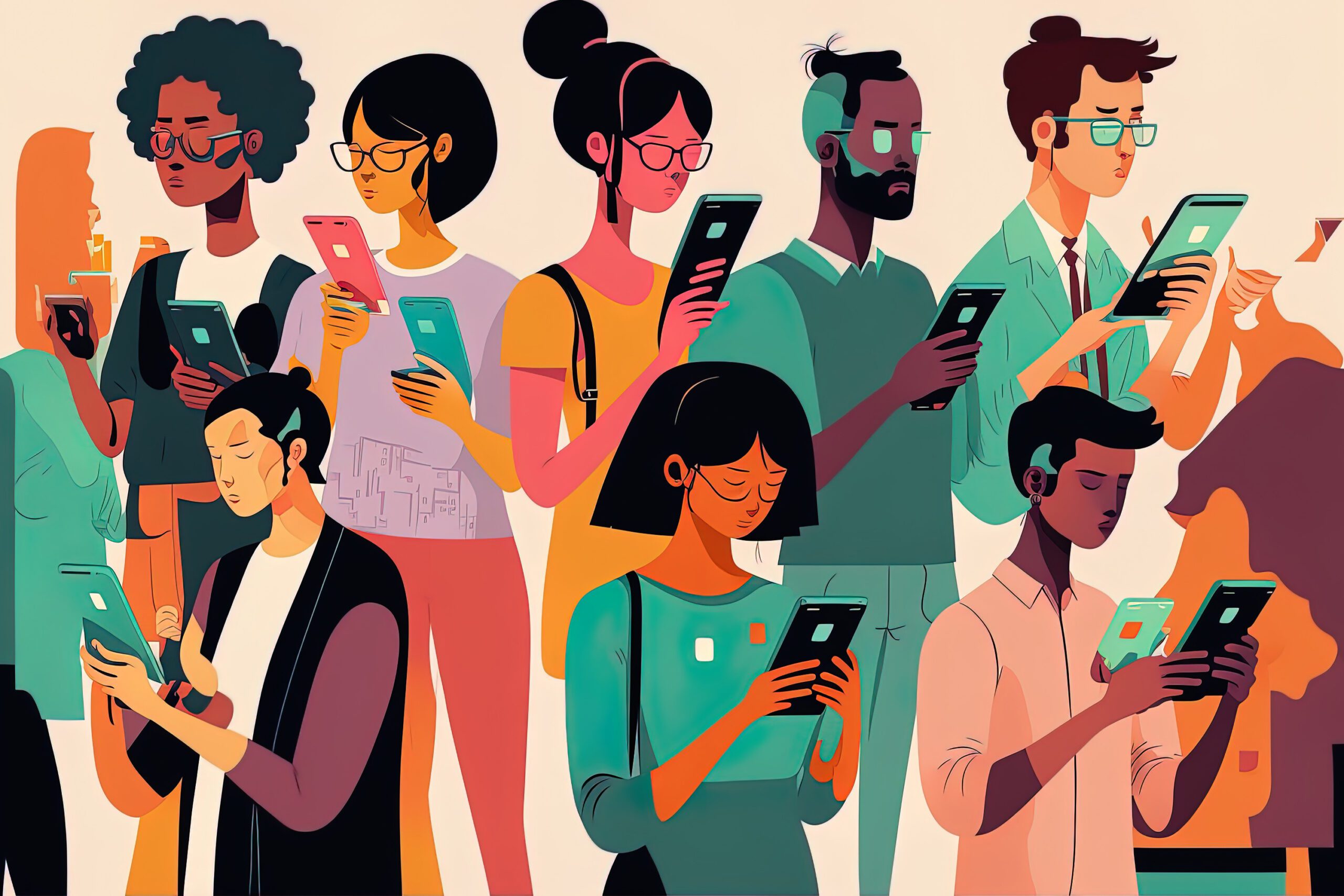
Have you ever wondered why it feels almost impossible to put your phone down after scrolling on Instagram for hours at night? Dopamine addiction might be to blame. Dopamine can trap you in a cycle of repetitive and sometimes negative behaviors. But how can we recognize when this is happening, and what can we do to break free from it?
What Is Dopamine?
When you eat your favorite pasta, dance to your top song on Spotify or kiss your loved one goodnight — that’s dopamine.
Dopamine is a neurotransmitter that serves as a chemical messenger, transporting messages between your brain’s nerve cells and your body, according to the Cleveland Clinic. Dopamine also serves as a hormone in the forms of epinephrine and norepinephrine and is released by your adrenal glands into your bloodstream.
When working as a neurotransmitter, dopamine aids in our movement, memory, attention, sleep, mood, learning and sense of pleasure. As a hormone, it performs various functions, such as removing sodium and water from the body and reducing insulin production in the pancreas, according to the clinic.
This “feel-good” chemical works with a reward system — when you do the things you need to do to survive and reproduce, it’s released, according to the clinic. This means that our brains are programmed to seek out behaviors and activities that release dopamine, so anything you view as pleasurable does so.
And of course, since you feel good, you want more of it. That’s when the addiction comes into play.
What Does a Dopamine Addiction Look Like?
We all want our bodies and minds to feel good, but not everything that makes us feel pleasure is necessarily healthy for us.
Since dopamine is released when we do things that we associate with pleasure, it can be released with negative behaviors or activities, such as eating an immense amount of sugar. According to the Cleveland Clinic, junk food and sugar release high levels of dopamine into your brain, making it incredibly addictive.
Dopamine addictions can also be seen with phone and social media use, attachments to toxic relationships, unhealthy substances like alcohol or nicotine and shopping.
But one of the biggest forms of dopamine addiction today is our screens. TJ Power, a neuroscientist and Sunday Times bestselling author, described in an article from The Standard that the world is obsessed with checking its phones, making us live in “dopamine land.”
Power described how picking up your phone when you are stressed, overwhelmed or thinking negatively will cause your dopamine to spike. Yet, your dopamine will also crash after you put your phone down, creating a “vicious circle of quick highs and nagging lows,” according to the article.
These screens, and our unhealthy dopamine addictions in general, serve as a distraction, providing us with temporary pleasure and offering an interruption, not a solution, to our problems.
Amanda Ashley, a Florida licensed mental health counselor, and the founder of Lit Session Holistic Integrative Wellness Inc., compared technology to the ocean — it’s powerful, useful and beautiful, but it demands respect, she said.
“A helpful reflection is to ask: Does this behavior expand my capacity, or does it narrow it?” she asked. “Does it support my health, relationships and sense of self — or does it pull me away from them? If a behavior feels compulsive, numbing or disconnected from choice, that’s information — not a moral failure.
How Can We Prevent or Solve a Dopamine Addiction?
When reflecting on what you might be addicted to for a dopamine boost, remember that too much of anything is rarely good for your mind or body.
To avoid constantly craving pleasure from specific endeavors or substances, try to engage in dopamine-boosting activities in moderation — set a timer to play video games for two hours a day, download an app to track your sugar intake or set a screen time limit for TikTok each night.
According to TJ Power, cutting phone time is one of the biggest solutions. This includes setting a goal to not use your phone in the morning and to make your screen not the first thing you see when opening your eyes, as stated in The Standard article.
Instead, splash your face with cold water in the morning, which will help boost your dopamine levels, Power said.
Staying active throughout the day, like taking a quick walk on your lunch break, can also help manage stress levels, in turn reducing intense cravings for pleasure.
Ashley said building a life that actually nourishes you can cause unhealthy cravings to naturally lose their grip.
“When you wake up with intention and structure your day to include what your nervous system truly needs, there’s less room — and less desire — for excess,” she said. “When your body feels regulated and supported, it doesn’t need to self-soothe through constant stimulation. Fulfillment reduces stress. Alignment reduces craving.”
So the next time you find yourself scrolling on TikTok for three hours before bed, aim to find the self control to shut your phone off and set a screen time limit. Though it might feel overwhelming at first, you are actively training your brain to fight off addiction.