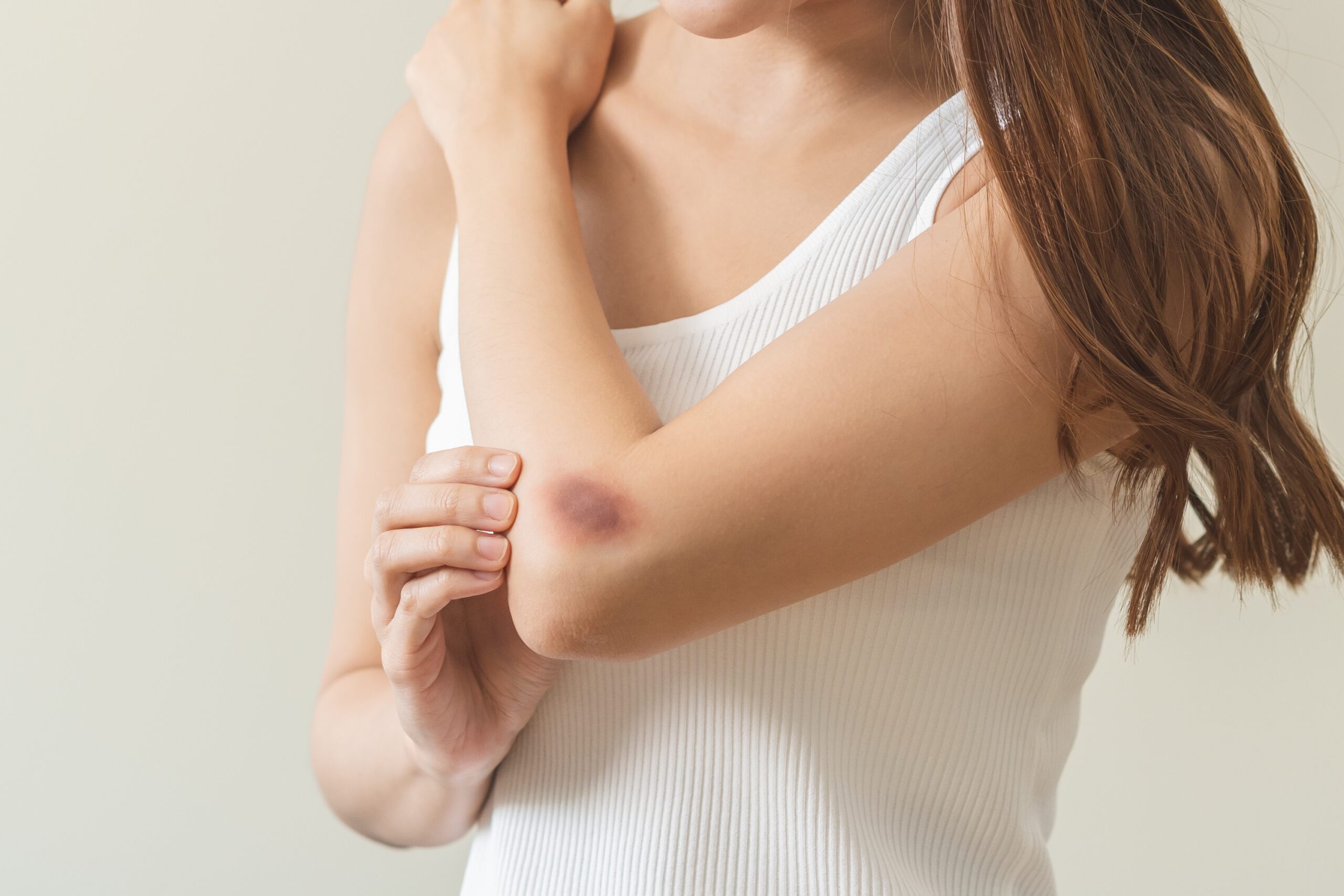
Bruises are quite the pain — literally and physically. They often show up when we can hardly remember how we got them and leave eye-catching blemishes, leading to family and friends saying, “How in the world did you get that?”
Here is what you need to know so that the next time that pesky, purple splotch appears, you’ll understand exactly what’s happening in your body.
What Exactly Is a Bruise?
A bruise, or ecchymosis in medical terms, is defined as skin discoloration caused by damaged, leaking blood vessels under the skin, according to the Cleveland Clinic. These vessels can become injured and burst from various forms of physical trauma, such as knocking your elbow into the kitchen cabinet, kneeling too long on a concrete floor or even tearing a muscle.
There are various severity levels of bruising, each with different pain intensities and healing times, helping to indicate the proper steps to take during the healing process. According to WVU Medicine, these bruises can be ranked similarly to burns:
• First-degree: Minor bruises that do not cause an intense level of swelling, inflammation or pain. You might not remember how you received this bruise since it is from a small impact, like lightly knocking your ankle against the wall or resting your elbows on a hard countertop for an extended period of time.
• Second-degree: Slightly more intense bruises that can lead to increased pain, swelling, tenderness or a darker color. You might experience joint pain if you experienced damage to a joint. Examples include getting struck by a hard object during sports or aggressively running into an item.
• Third-degree: Bruise that will lead to severe pain, discoloration and loss of movement.
Bruise Colors and Stages Explained:
According to Medical News Today, a bruise’s color and healing length can indicate what stage of the recovery process it is in, helping you estimate how much longer it has left and when to visit a doctor, if necessary.
• Red: During the first 24 hours after injury, the damaged capillaries will begin to leak blood, and you might see an inflamed and tender bump begin to form.
• Black, blue, purple or darkened skin: During days one and two following the injury, your bruise will transform into a black, blue or darkened color as the leaking blood runs out of oxygen, as stated in Medical News Today. The third or fourth day might lead to reduced swelling or tenderness.
• Yellow, green, yellowish brown or lightened skin: After five and 10 to 14 days, as the healing process continues and the body breaks down hemoglobin, according to Medical News Today, you will start to see a yellow or greenish color while the bruise fades.
Types of Bruises and Severities:
The average person experiences about 4,000 scrapes, cuts and bruises over his or her lifetime, according to a survey by Talker Research for Curad.
But aside from the typical, everyday under-the-skin bruise, bruises can take other forms, varying in severity, locations and causes:
• Bone contusion: According to UMass Memorial Health, bone bruises occur when the trabeculae, or the bone marrow and fibrous tissue inside the bone, are damaged. This can be caused by sports injuries, vehicle accidents, sprains or falls, and can lead to swelling, pain, soreness, discoloration and stiffness.
• Hematoma: A hematoma is slightly more severe than the average bruise and forms when blood pools into a certain area in the body, as stated by the Cleveland Clinic. According to Mercy Health, hematomas can be caused by car accidents, broken bones, head injuries, gunshot wounds, falls or health conditions like aneurysms, viral infections, medications or fractures. With a hematoma, you will most likely feel warmth, intense swelling, pain, redness and inflammation.
They can often be resolved with at-home care, but if you notice signs of infection, a lack of healing within the following two weeks or other serious health symptoms, the Cleveland Clinic advises visiting a doctor.
• Internal bruising: Occurs on your muscles or organs, usually from an accident or blunt trauma, according to Healthline. Internal bruising can range from treatable bruises, like those to the muscle, or ones that require vital medical care, like lung or kidney bruises.
When Should I Reach Out to a Doctor?
Bruises are typically nothing to worry about. However, if you notice a pattern of consistent and unexplained bruising on your body, it is recommended to reach out to your primary care physician.
According to Medical News Today, though rare, this could indicate health issues such as certain forms of cancers like leukemia, liver problems or bleeding disorders.
Additionally, if you are suffering a bruise from an injury and do not notice improvement within the next two weeks or experience increased swelling, pain or inability to move, reach out to your doctor to rule out any severe injuries like a fracture, hematoma or broken bone.
* Always seek medical care right away if you have questions regarding your bruising.