
When most people think of food allergies, peanuts, shellfish and dairy are usually the first foods that come to mind. They’re certainly among the most well-known, but they’re far from the only culprits.
Today, more than 33 million Americans are living with food allergies, including about one in 13 children, according to the nonprofit Food Allergy Research & Education (FARE). While some allergies are common enough to appear on restaurant menus and food labels, others are so rare that they often catch people completely by surprise.
Knowing what to watch for and recognizing the signs of an allergic reaction can make all the difference.
The “Big Nine” Allergens
According to the U.S. Food and Drug Administration, nine foods account for the vast majority of serious allergic reactions in the United States. They include:
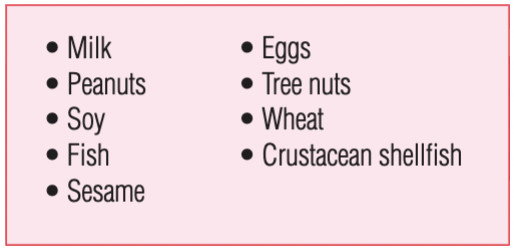
These foods are required by federal law to be clearly identified on packaged food labels because together they account for most food allergies.
While some children outgrow allergies to milk, eggs, soy or wheat, allergies to peanuts, tree nuts, fish and shellfish are more likely to persist into adulthood, according to the American College of Allergy, Asthma & Immunology.
The Allergies You Might Not Expect
Not every food allergy involves a common ingredient. Some people experience allergic reactions to fruits such as kiwi, bananas or peaches, often because the proteins resemble those found in certain pollens.
This condition, known as oral allergy syndrome, or pollen food allergy syndrome, may cause itching or swelling of the lips, mouth and throat, according to the American Academy of Allergy, Asthma & Immunology. Others develop allergies to spices like mustard or coriander, while chickpeas, gelatin and even sunflower seeds have all been documented as less common allergens
. One of the most unusual is alpha-gal syndrome, an allergy to red meat that develops after the bite of certain ticks, including the lone star tick found throughout much of the southeastern United States. According to the Centers for Disease Control and Prevention (CDC), symptoms often don’t appear until several hours after eating beef, pork or lamb, making the allergy much harder to connect to the food that caused it.
Recognizing the Signs
Food allergy symptoms can range from mild to severe, and they don’t always look the same from person to person. In fact, someone may have a relatively mild reaction one time and a much more serious one the next.
According to the Mayo Clinic, common symptoms include:
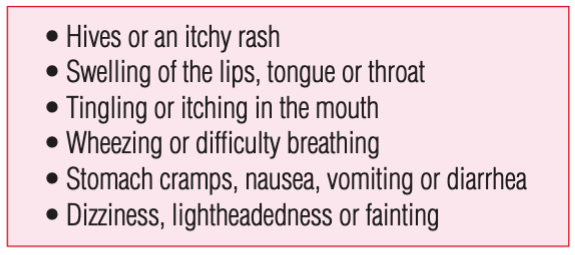
In severe cases, a food allergy can trigger anaphylaxis, a life-threatening reaction that can cause the throat to swell, blood pressure to drop and breathing to become difficult. Experts stress that anaphylaxis requires immediate treatment with epinephrine, if available, followed by a call to 911.
Food Allergy or Food Intolerance?
Not every unpleasant reaction to food is an allergy. A true food allergy involves the immune system and has the potential to become life-threatening.
A food intolerance, on the other hand, affects the digestive system. Lactose intolerance, for example, may cause bloating or stomach discomfort but does not trigger an immune response.
Because the symptoms can sometimes overlap, the American Academy of Allergy, Asthma & Immunology recommends seeing a board-certified allergist if you suspect a food allergy. An allergist can review your medical history and determine whether testing is appropriate rather than relying on internet advice or self-diagnosis.
Food allergies are more diverse than many people realize. Understanding both the common and uncommon triggers, and knowing how to recognize the warning signs, can help you respond quickly if a reaction occurs and make every meal a little safer.

Related Articles
How to Recognize the Signs of Lyme Disease