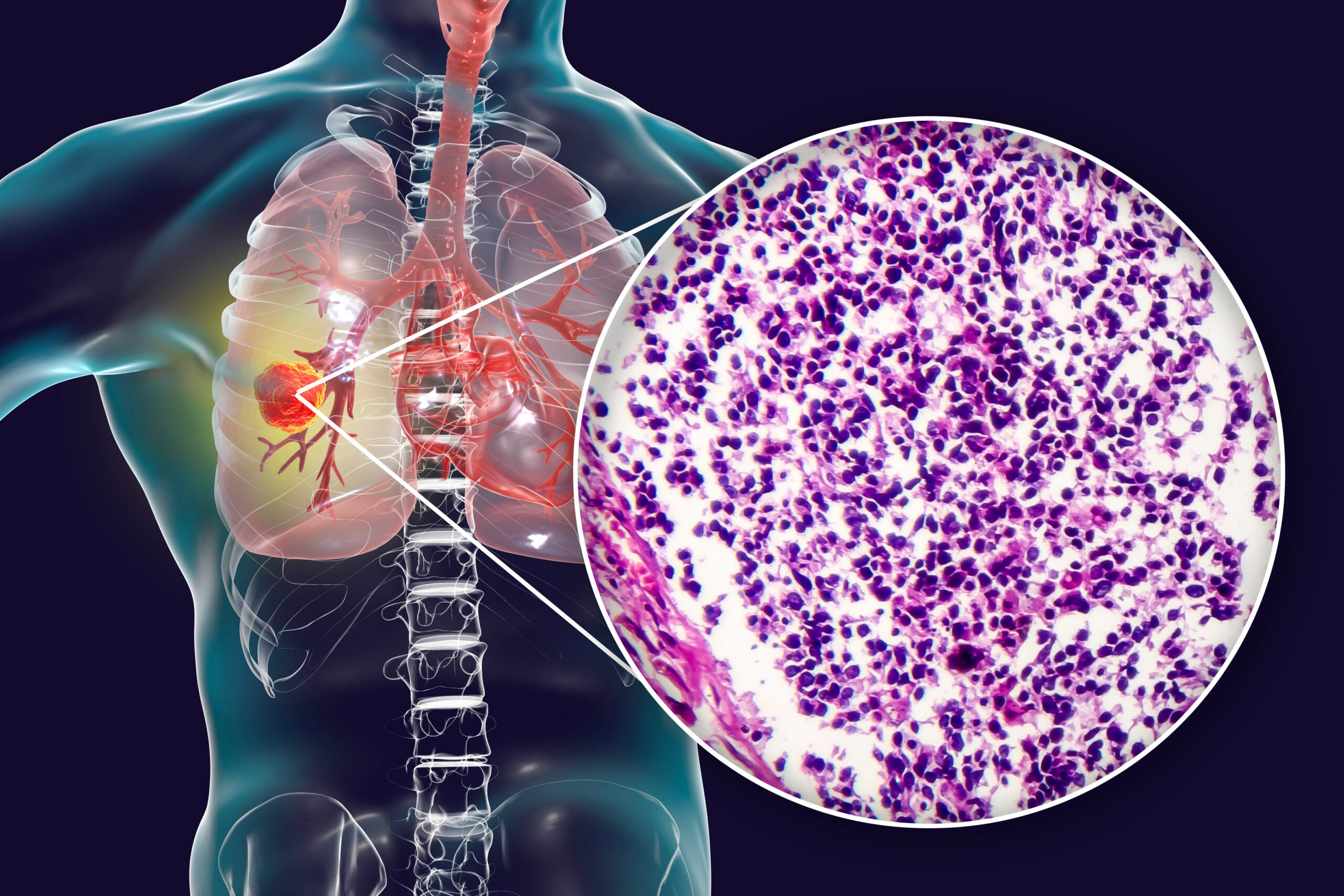
Lung and bronchus cancer is the leading cause of cancer death in the U.S., accounting for more deaths than breast, prostate and colorectal cancers combined. While most people associate lung cancer with smoking, this assumption can be dangerously misleading. As physician and longevity expert Dr. Peter Attia has emphasized, “The scary truth is that people who never smoke can still develop – and die from – lung cancer.” Lung cancer is not just a smoker’s disease, and understanding who should be vigilant could save lives.
The Statistics
According to the American Cancer Society, approximately 226,650 new lung cancer cases and 124,730 deaths are expected in 2025. While it represents just over 11% of cancer diagnoses, it accounts for more than 20% of all cancer deaths.
The reason? Late detection. The average five-year survival rate for lung cancer is about 29%, but when caught early and treated before it spreads, survival can jump above 60%. Unfortunately, early lung cancer often shows little to no signs before disease becomes advanced.
Lung Cancer Among Non-Smokers
While we think that only smokers are affected, 10 – 20% of lung cancer cases occur in people who have never smoked – that’s roughly 20,000 to 40,000 Americans every year. If lung cancer in never-smokers were classified as its own disease, it would still rank among the top 10 deadliest cancers in the country.
One large U.S. registry analysis found that about 12% of all newly diagnosed lung cancer patients report never having smoked. Among women, the figure is even more striking – nearly 19% of female lung cancer patients are lifetime non-smokers.
In 2015, researchers estimated approximately 19,800 lung cancer deaths among never-smokers in a single year (around 11,000 women and 8,800 men). These numbers are not trivial. As Attia notes, “If we’re only screening smokers, we’re ignoring a huge segment of lung cancer mortality.” Nearly 20,000 deaths per year is not something to overlook.
Why Non-Smokers Get Lung Cancer
Lung cancer in non-smokers is typically driven by different factors, including:
• Radon exposure (a leading cause in never-smokers)
• Air pollution or secondhand smoke
• Occupational exposures such as asbestos or diesel fumes
• Genetic mutations, which are often seen in adenocarcinomas
• Family history or unknown genetic predispositions
These cancers also tend to occur at a younger age, and because they fall outside the typical risk profile, are often diagnosed late after several misdiagnoses.
Symptoms That Should Never Be Ignored
Whether you smoke or not, persistent lung symptoms should never be dismissed. Key warning signs include:
• A persistent or worsening cough lasting more than six weeks
• Shortness of breath or wheezing
• Chest pain
• Coughing up blood
• Unexplained fatigue or weight loss
Because non-smokers and healthcare practitioners may not immediately suspect lung cancer, these symptoms are sometimes attributed to asthma, allergies or bronchitis, delaying critical diagnosis.
Who Can Get Screened Today?
Currently, U.S. Preventive Task Force and American Cancer Society guidelines recommend annual low-dose CT scans for adults aged 50 to 80 years old with a 20+ pack-per-year smoking history who either currently smoke or quit within the last 15 years. Non-smokers are not currently eligible for routine screening under today’s insurance-driven policies.
Screening involves a quick, painless scan that can detect tiny lung nodules when they are still curable. For high-risk smokers, this screening has been proven to reduce mortality.
A Debate: Should Screening Be Expanded?
Peter Attia and other prevention advocates argue that risk-based screening (not just smoking history) should guide screening decisions. As Attia states, “I’ve never smoked, yet I chose to get a lung CT. Why? Because lung cancer is often lethal when found late — and silence is not protection.”
However, major health agencies remain cautious. Expanding screening to the general population could raise harms from false positives, unnecessary biopsies, radiation exposure and overdiagnosis. The Lancet recently noted, “There is no current evidence that screening never-smokers improves mortality,” emphasizing the need for more research to determine whether to alter current guidelines.
What Non-Smokers Can Do Now
• KNOW YOUR RISK: If you’ve had long-term exposure to radon, occupational pollutants, secondhand smoke or have a strong family history, speak to a physician (preferably a pulmonologist) about individualized screening recommendations.
• TEST YOUR HOME FOR RADON: The EPA identifies radon as a major cause of lung cancer in never-smokers.
• NEVER IGNORE PERSISTENT RESPIRATORY SYMPTOMS: A cough lasting more than six weeks deserves imaging, regardless of smoking history.
• ADVOCATE FOR YOURSELF: Medicine is evolving. Risk-based screening models are being developed. You can request a low-dose CT, even if insurance won’t cover it if you feel it is warranted.
A Shift in Awareness
While the data is still developing on the pros and cons of screening non-smokers as a whole, it’s important to change perceptions. Lung cancer is not exclusively a smoker’s disease. By broadening awareness, we can encourage earlier investigation and empower non-smokers with symptoms to seek answers and advocate for their health. Early diagnosis is critical to better long-term outcomes.
As Dr. Attia puts it: “Prevention is not about panic – it’s about not missing the silent threats. Lung cancer deserves that attention, even for those who never lit a cigarette.”