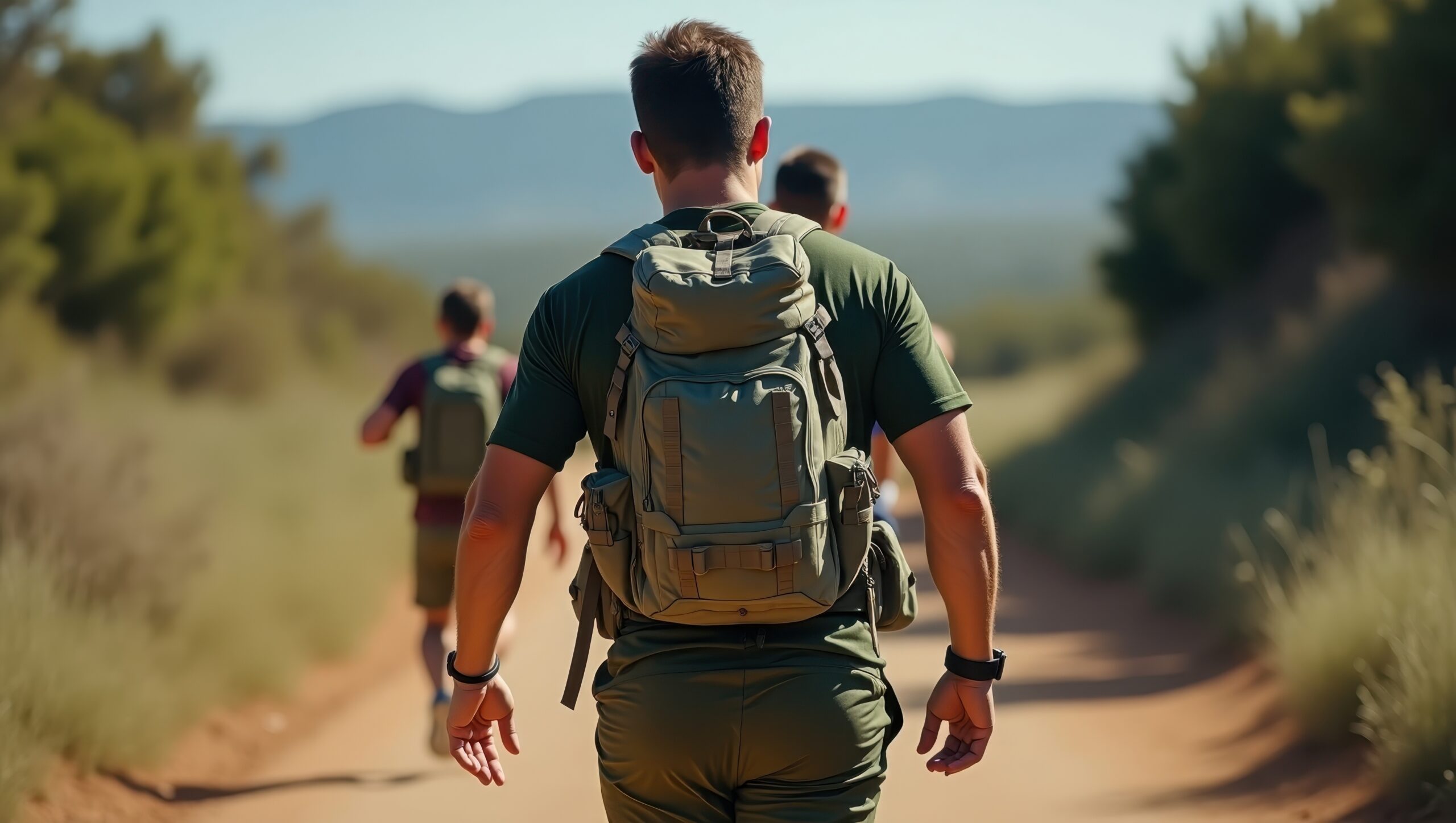
Rucking has become a popular fitness activity in recent years. Many associate it with elite competitors but rucking is an activity that is accessible to nearly everyone. In fact, you’ve almost certainly done it in everyday life without thinking of it as an intentional exercise – you’re already an expert!
WHAT IS RUCKING? — According to GORUCK, a leader in rucking accessories and events, rucking is defined as “the action of walking with weight on your back. Walking with a weighted rucksack (aka backpack) is a low impact exercise based on military training workouts. Hiking is rucking in the mountains and urban hiking is simply called rucking. You’ve probably even spent time rucking – traveling, bringing books to school, or on your commute to work. Carrying weight is a necessary part of life, and as it turns out, humans are naturally good at it, too.”
RUCKING ORIGINS — Rucking for fitness originated with military training. The U.S. Army (as well as militaries around the world) use this type of training to prepare soldiers for long hikes through the wilderness carrying their supplies. In order to gain their Expert Infantryman Badge (EIB), Army infantry recruits must complete a 12-mile ruck march within three hours carrying a load between 35-100 pounds (along with their rifle) as one of the requirements.
BENEFITS OF RUCKING — According to the Cleveland Clinic, there are several benefits to rucking:
• Burn more calories: Rucking can burn up to three times as many calories as walking without weight, making it similar to jogging.
• Build strength: A study by Mair, De Vito and Boreham found that weighted walking in adults 65 to 74 years old improved leg strength, power and functional abilities.
• Improve physical conditioning and endurance: Rucking is a low-impact way to increase physical performance and improve endurance.
• Mental health boost: Typically completed outdoors, nature can lower stress, blood pressure and enhance mood. Rucking is also often completed with others, providing social benefits.
Additional benefits cited by GORUCK include:
• Improve bone density: A study by the U.S. Army Research Institute of Environmental Medicine determined that rucking had a positive effect on bone formation and resorption.
• Blood sugar management: Combat insulin resistance by preventing buildup of visceral fat. Rucking directly after eating helps control blood sugar levels immediately.
• Combats dementia: Fighting against insulin resistance also helps prevent the buildup of plaques associated with Alzheimer’s disease.
• Improve posture: Work against that tendency to hunch over caused by endless hours in front of a computer. Improved posture also helps alleviate low back pain.
IT’S NEVER TOO LATE TO START — While rucking can be completed at any level, those who are looking for a more competitive route can find a variety of events at GORUCK that will challenge the limits of physical and mental resilience. Everything from a rucking 5K to some of the most challenging endurance events. Savage Race also offers a rucking division for many of their events.
TALES FROM A LOCAL — Local resident and fitness trainer Noah Holmer says he got into rucking a few months ago as a way to add an extra physical and mental challenge to his daily walks. He has embraced rucking as part of his workout routine and has even created a local group for men to complete fitness routines together, including rucking. Holmer states, “the best part is almost anyone can do it. You’re walking with extra weight, you can adjust pace, distance and weight to align with your ability.”
For those new to rucking, Holmer suggests to “start simple. Throw on a weighted backpack, weighted vest and go for a walk. A 20-30 minute walk with 10-20 pounds is a relatively safe starting place, depending on your current fitness level. Keep it manageable and consistent. You can ruck solo, join a group, throw on a pack anytime you walk your dog, or make it a social event. The goal is personal improvement, physical and/or mental.”
Grab that backpack lurking in the back of your closet, throw some stuff in it and head outside. Get comfortable with the idea of carrying around some extra weight. Challenge yourself by exploring local trails. As you get comfortable, add extra weight or distance and pick up the pace. Focus on maintaining good posture throughout the ruck. Increasing weights, distance or speed will have added benefits but as with any exercise, ease into it slowly and consult your provider beforehand, particularly if you have certain medical conditions.