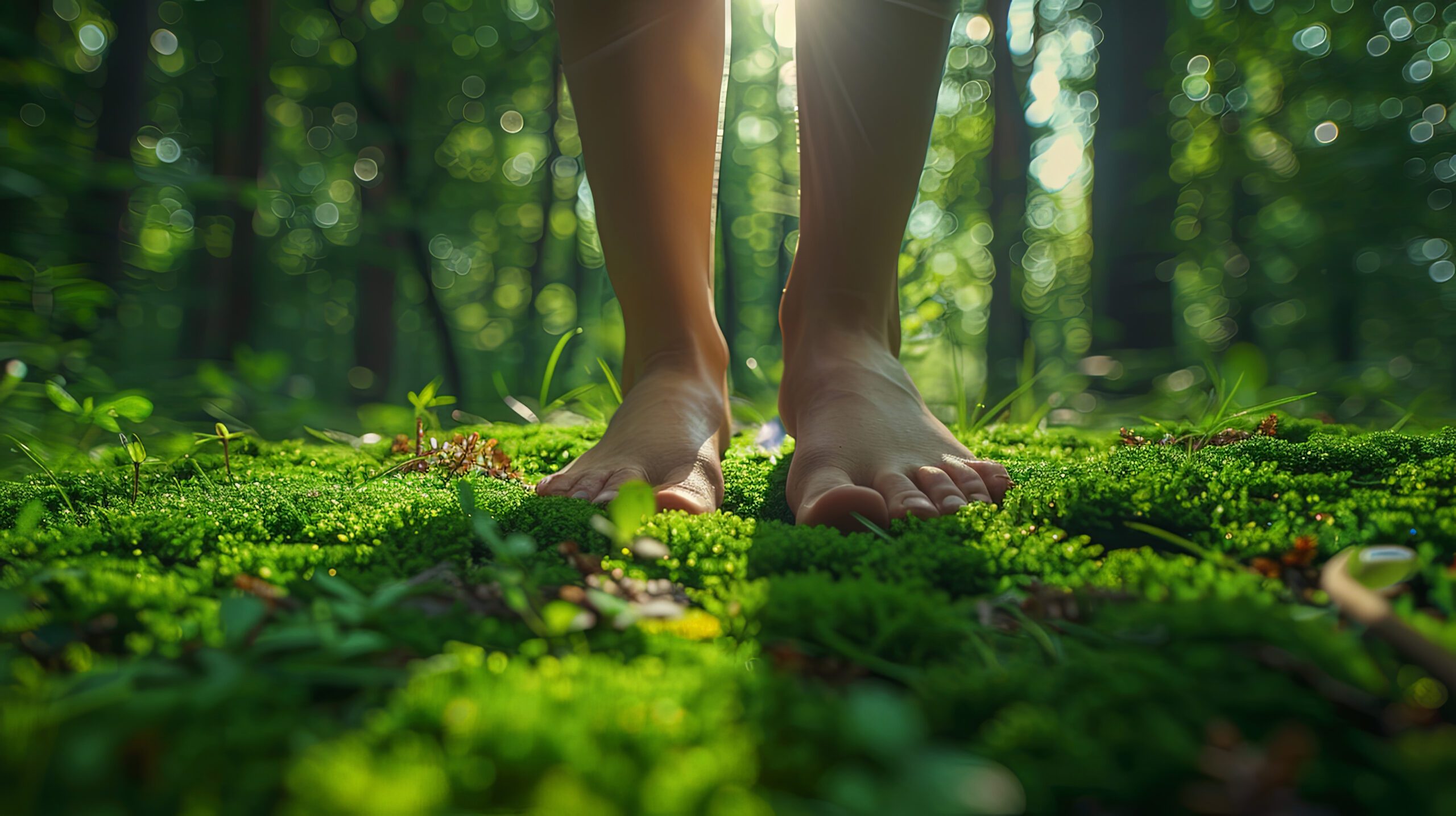
Grounding, also sometimes known as earthing, is a wellness practice that involves direct physical contact with the Earth’s surface or elements. While this may sound like a trendy health habit, emerging scientific research suggests that grounding may offer measurable health benefits.
Earthing varies slightly from grounding in that it refers to making physical contact with the Earth’s surface whereas grounding may also include tools designed to elicit the same response. At its core, grounding is based on the idea that the Earth’s surface carries a negative electric charge, and contact with it allows the body to absorb electrons. These electrons are believed to have antioxidant effects, helping to neutralize free radicals and reduce inflammation in the body.
Psychologist Susan Albers, PsyD from the Cleveland Clinic explains that proponents of earthing believe that our extensive shoe use is negatively impacting our health. “They point out that we’ve just recently started wearing shoes with rubber soles, which don’t conduct electricity,” she continues. “So, part of the argument is that we’ve removed that contact from the Earth, which is making us unwell.”
BENEFITS OF GROUNDING
According to a review published in the Journal of Environmental and Public Health, grounding has been associated with a range of potential benefits, including improved sleep, reduced pain, decreased stress and enhanced immune function (Chevalier et al., 2012). One study cited in the review showed that grounding during sleep normalized cortisol levels and improved sleep patterns in participants with chronic stress. Another small study published in The Journal of Alternative and Complementary Medicine found that grounding reduced blood viscosity, a risk factor for cardiovascular disease (Sinatra et al., 2013). A 2015 study by Oschman et al. shows that grounding has a positive effect on inflammation in the body – both chronic inflammation as well as more acute wound healing.
Local physical therapist Paul Timler, PT, MTC of FORGE Performance Physical Therapy promotes grounding with his clients as a way to help reduce inflammation, rehab injuries and restore balance. “As performance-based PTs, we’re always looking for simple ways to support your nervous system, improve tissue recovery and build resilience. Grounding checks a lot of boxes:
• It promotes parasympathetic activity (rest and digest mode), helping counteract the chronic stress state many of us live in.
• It encourages sensory awareness and balance.
• It’s an invitation to move and connect with your environment — which can boost mood and even reduce pain perception.”
Timler cites the benefits found in scientific studies that show that “contact with the Earth may neutralize free radicals, calming systemic inflammation — a common root of pain and chronic conditions. Some evidence shows faster muscle recovery and reduced DOMS (delayed onset muscle soreness) in athletes who use grounding techniques post-training.”
HOW TO INCORPORATE GROUNDING AS PART OF A HEALTHY LIFESTYLE
First and foremost, get outside! Walk around barefoot on textured natural surfaces – grass, sand, soil, pebbles. Dig in the dirt without gloves – in your garden, building a sand castle at the beach, dig for treasure with your kids. Swim in a natural body of water such as a lake, river or ocean. Sit or lay directly on the ground outside and read a book, or sit in a chair and let your bare feet rest on the grass. It really is as simple as this! Start slow and work up to spending 20-30 minutes per day completing one of these activities.
If you want to get grounded inside, you can also try a grounding mat, which works by connecting your body to the Earth’s electrical energy. Grounding sheets are also available so you can be recharged in new ways while you’re sleeping. There are studies to suggest that grounding sheets are particularly helpful for those who suffer from insomnia or chronic stress.
Although scientists continue to study the effects of grounding and how it may benefit certain conditions, it is still considered a complementary practice and should not wholly replace medical intervention where appropriate. As research evolves on this practice, it’s still considered safe for most people to incorporate this into their wellness practices. The benefits of being outdoors have also been studied extensively so at the very least, you may experience an improved mood and less stress! Seek the advice of your provider if you have pre-existing medical conditions. Those with diabetes or peripheral neuropathy should take extra precautions for foot safety if opting to go barefoot. Get out there and get grounded!
Related Articles:
Chafing: The unwanted side effects of exercise