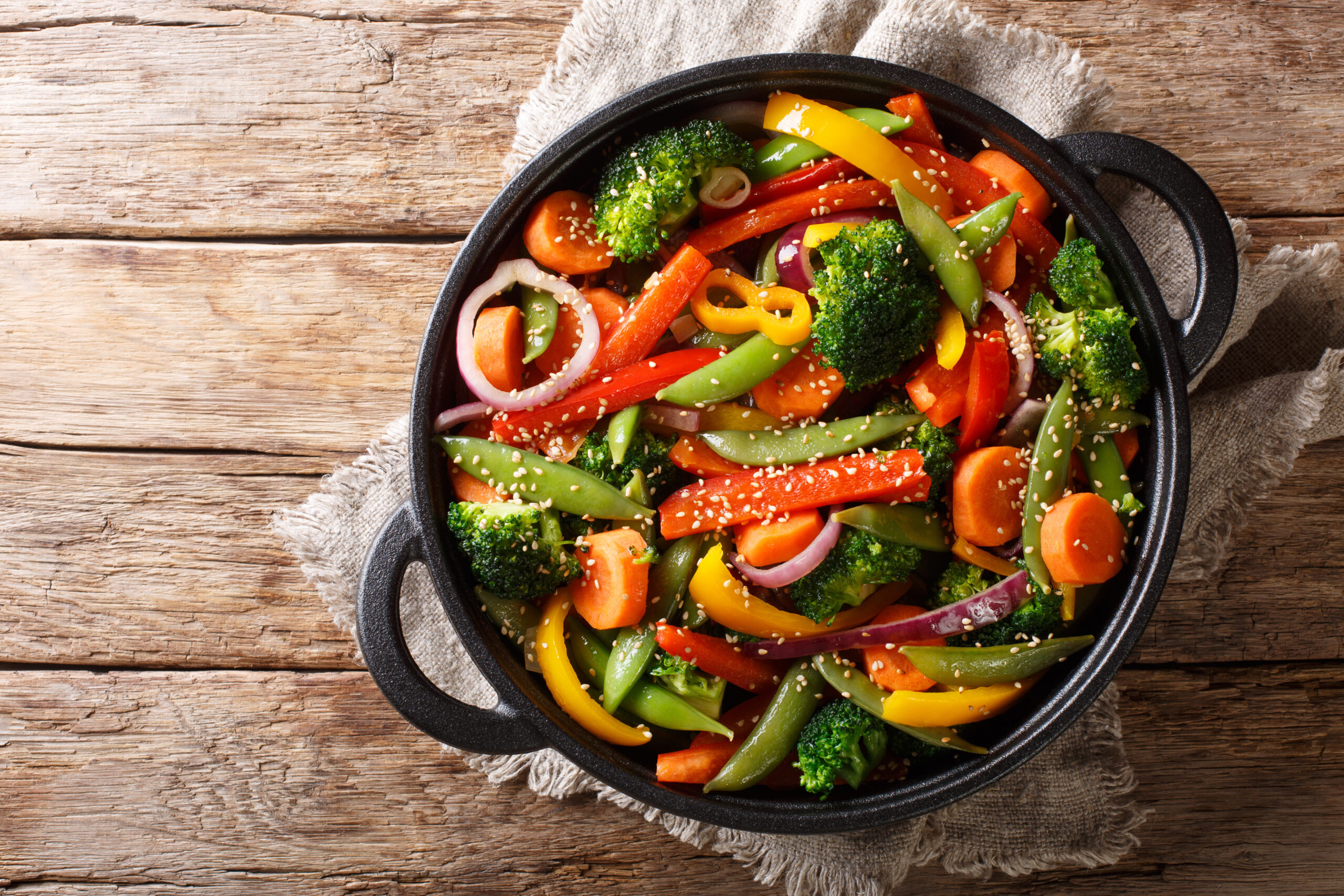
Raw vegan diets – those that consist exclusively of plant-based foods eaten raw and not heated to more than 118 degrees – have gained popularity in recent years as a way to maintain nutrients for better health. But is raw always better? What about cooked vegetables?
Jen Bleiweis, local Registered Dietitian Nutritionist (RDN, LD/N, NBC-HWC) and Board Certified Health Coach states, “Some may think that eating raw vegetables would be best, however, in some instances, cooking can increase bioavailability of some nutrients. Retaining vitamins, minerals, polyphenols, carotenoids, amino acids and glycosinolates is the goal in order to maximize the health benefits from consuming these nutrients.” Bleiweis explains that, “Studies are mixed and it is difficult to link raw versus cooked vegetable benefits to mortality and disease as there are so many factors that must be adjusted for.”
Raw or Cooked?
With mixed signals in scientific studies, it’s hard to know what to do. Bleiweis’ advice echoes what your mom always said – eat your veggies! “For now, the best rule of thumb is to eat more vegetables (mixed combination of raw and cooked) and in a form that is palatable to you.” Because studies do not clearly indicate a superior preparation method, consuming a wide variety of vegetables in different forms is the best bet for maximum benefits. Choose vegetables of different colors to maximize the array of vitamins and minerals.
When cooking vegetables, Bleiweis explains that minimizing exposure to heat and liquid helps veggies retain the most nutrients so methods that have a shorter cooking time or lower temperature are typically the best. Some vegetables also have some guidelines surrounding cooking methods but this is mainly to avoid carcinogenic compounds forming such as heterocyclic amines (HCAs), polycyclic aromatic hydrocarbons (PAHs) and acrylamide.
The Skinny on Popular Cooking Methods
While the best vegetable is the one you’ll eat, there are various methods to prepare veggies, providing different amounts of nutrients. Bleiweis breaks down the details and some pros and cons of some popular vegetable preparation methods.
Steaming
Steaming is best for vegetables because it uses moist heat at a lower temperature. The food has minimal contact with water so vitamins are not lost in the liquid. Although it is best not to prolong the cooking time as this will increase the exposure to heat and result in a soggy texture.
Stir Frying
This method uses higher heat but shorter cooking times. This option also pairs with a small amount of oil which can enhance fat soluble vitamin absorption. Using a healthy fat such as olive or avocado oil and cooking until just crisp will maximize results.
Microwaving
Microwaving uses minimal water with short cooking times but it can often be challenging to achieve a favorable texture.
Air Frying
Air frying utilizes much higher heat but has a shorter cooking time than conventional frying or baking. It also minimizes the use of fats and can easily achieve a nice, crispy texture.
Baking/Roasting
The heat used here is not as high and the water exposure is low, however, if the foods are exposed to heat for longer, there is a risk of overcooking or dehydrating. On the plus side, roasting vegetables enhances flavor so it may lead to increased intake.
Grilling
Often considered one of the healthiest cooking methods, grilling can expose foods to high heat for longer periods. With vegetables, keep the time shorter and avoid charring vegetables or cooking with meat drippings over the grills to avoid HCA’s, PAH’s and acrylamide.
Frying
Frying is the least desirable method due to high heat exposure and plentiful fats.
Boiling
Boiling is a popular cooking method but with high exposure to water, vitamins and minerals will leach into the water. You can retain and consume the cooking liquid (as in soups or absorbed into grains) to get every drop of nutrients.
Whichever method or methods you choose, do your best to eat plenty of vegetables. They are a cornerstone of solid nutrition and a healthy lifestyle.