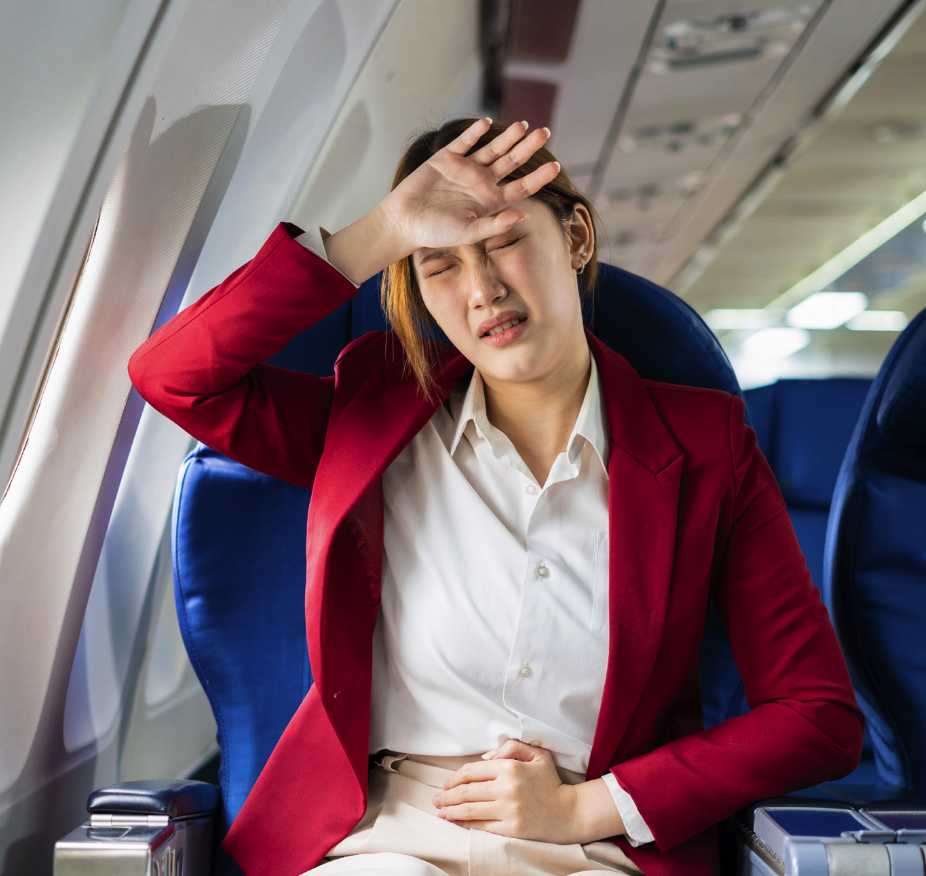
Flying may appear to be a passive activity — after all, you’re sitting still for long periods of time — but your body is actually working overtime to maintain the status quo.
There’s a lot happening beneath the surface when your body is in a mild state of stress during travel.
Airplane Air
According to the Cleveland Clinic, commercial aircraft cabins are pressurized to an altitude equivalent to approximately 6,000 to 8,000 feet above sea level, meaning oxygen availability is slightly lower than what the body is accustomed to in Florida.
Cabin humidity is also extremely low, often drier than many deserts — a big change from our humid Florida climate. These conditions can cause a multitude of symptoms both during and immediately after flying.
The Brain and Nervous System Effects
Dry cabin conditions, time zone changes, noise and poor posture can cause travelers to feel weary. This can manifest in overall exhaustion, brain fog and jet lag, particularly when the circadian rhythm is disrupted because of time zone changes or interrupted sleep cycles due to flight schedules.
To minimize the impact, acclimate to local time zones quickly by establishing a routine eating and sleeping pattern as soon as possible.
Eyes, Nose, Throat and Skin Impacts
Remember that dry air? It can cause mucous membranes to dry out and produce nasal irritation, scratchy throats, dry skin, dry eyes and chapped lips.
Load your carry-on with nasal saline spray, chapstick and hand lotion to get ahead of the problem. Consume plenty of liquids to keep the whole system hydrated.
Ear and Sinus Pressure
Rapid pressure changes during takeoff and landing can cause pressure to build in the ears and sinuses, particularly if there is congestion present. This may cause ear popping, muffled hearing, headaches and sinus pressure, particularly if you have any preexisting cold or allergy symptoms.
Chewing gum (or snacks), yawning or gentle pressure-equalization techniques can minimize effects.
Lungs on Overtime
The dry cabin air, sitting in a cramped position with rib cage compression and poor posture, can cause shallow breathing, lightheadedness, reduced oxygen intake and fatigue. This can be particularly noticeable in those with preexisting lung and/or cardiac conditions.
To breathe easier, sit taller than you think you need to in order to fully open up the lungs. Try breathing techniques such as a four-second inhale with a six-second exhale. Walking around during the flight can also help bring extra oxygen into the lungs.
Digestive System Woes
Ever feel bloated and gassy when flying? The lack of movement can slow digestion, while cabin pressure can expand intestinal gas. Top this off with dehydration and irregular eating schedules, and your bowels may be a little more sluggish than usual.
Get up mid-flight, move around and request an extra glass of water during beverage service.
It’s Not Just About Limited Leg Room
Paying for extra legroom may make you more comfortable, but it won’t solve all potential leg problems. While sitting for prolonged periods, gravity draws blood flow into the legs and feet, which can cause cramping and swelling.
On rare occasions, sitting for long periods can cause deep vein thrombosis (DVT), a blood clot that typically forms in the legs. This can be particularly dangerous if the clot travels to the lungs, causing a pulmonary embolism (PE), a life-threatening condition that requires immediate medical attention. Those who are pregnant, take certain hormonal birth control options, smoke, have a history of cancer or have had previous blood clots or circulation disorders are at particular risk.
To help prevent circulation problems, flex the calves while seated, get up and walk around every hour or so and consider wearing compression socks. Stay hydrated and avoid excessive alcohol intake.
Dry as the Desert
The cabin air isn’t the only thing dry on your flight. Your body can quickly become dehydrated under these conditions. Dehydration can contribute to all the symptoms listed above.
To combat dehydration, drink extra water before, during and after the flight to maintain adequate hydration.
Immune System on Alert
Many travelers report getting sick after air travel, but the culprit is usually not the air inside the plane.
Most commercial aircraft use HEPA filtration systems within the cabin. However, waiting in lines and crowded areas, sleep deprivation, stress and dry mucous membranes can leave you more susceptible to picking up an unwanted illness.
Wipe down tray tables, wash your hands frequently, avoid touching your face, stay hydrated and get plenty of sleep to minimize the chances of bringing home something other than your luggage.
Recovery Is the Name of the Game
Not only is it important to take care of yourself during flight, it’s also critical to allow your body to recover properly.
Stretch, walk around, get some gentle exercise, drink plenty of fluids, return to normal sleeping and eating schedules as quickly as possible and use compression or elevation to alleviate leg swelling.
Flying is one of the few modern experiences in which nearly every system in the body is affected simultaneously — circulation, hydration, digestion, sleep, immunity and sometimes even mood.
Most of the effects are temporary, but understanding what’s happening physiologically can help travelers support their bodies before, during and after long travel days so they can get the most out of their trip.
Related Articles
5 Tips for Staying Hydrated This Summer
The Most Nutritious Ways to Prepare Your Vegetables